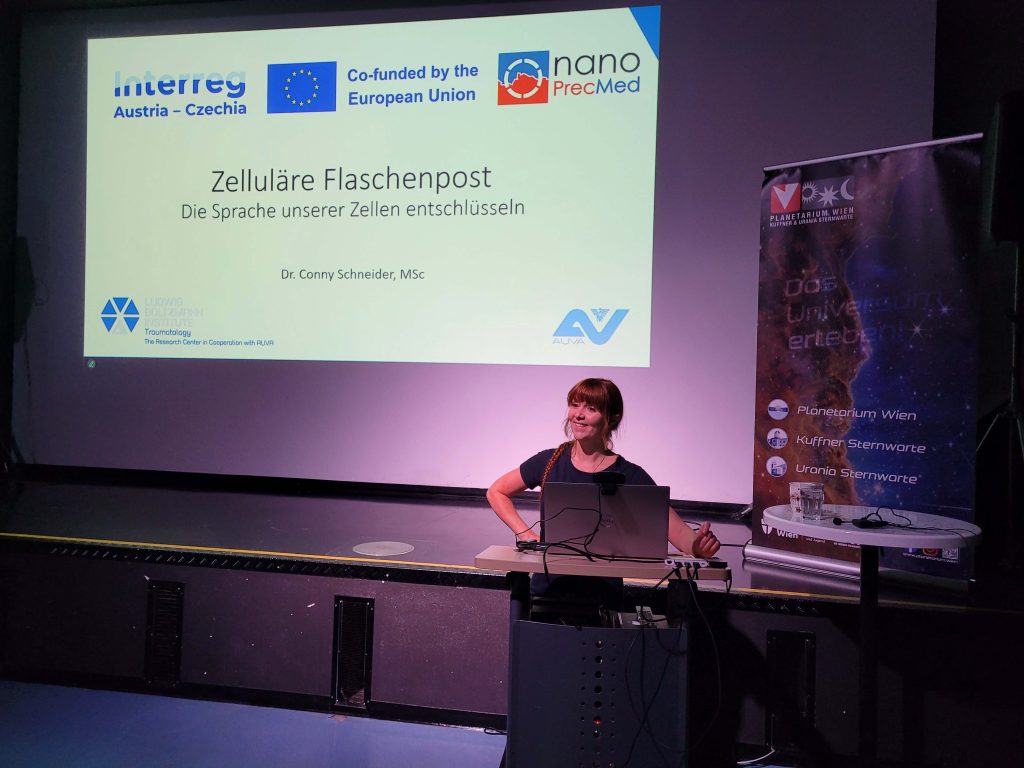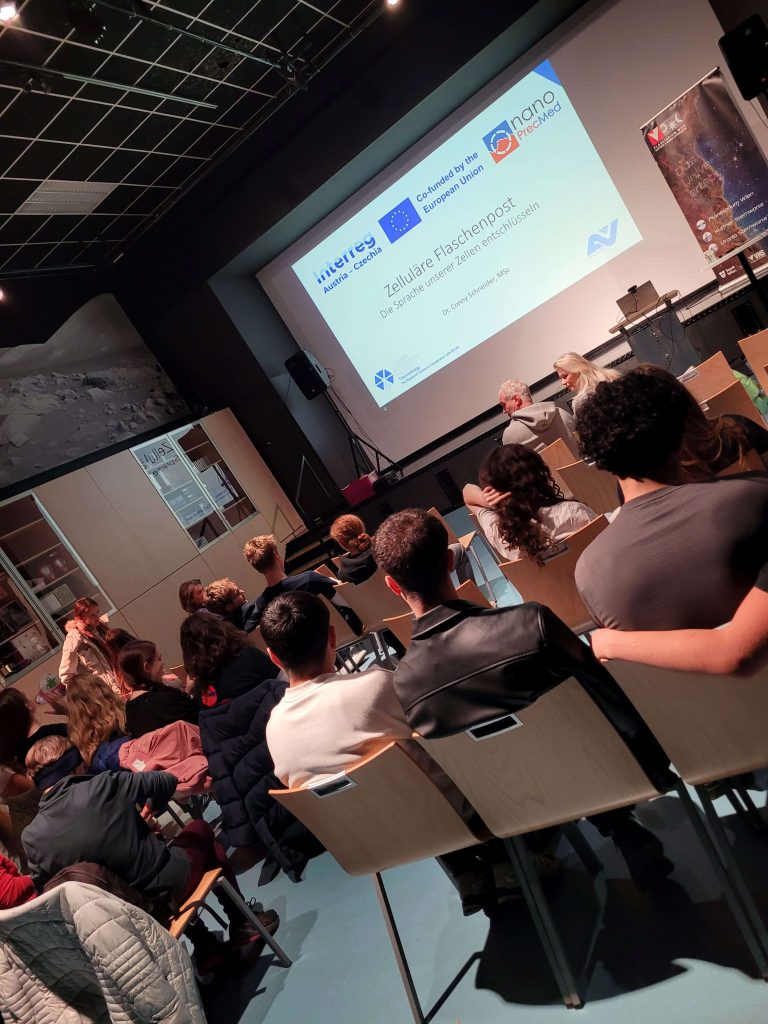
What can our cells tell us, and how can we decode their language for the medicine of tomorrow? This was the guiding question of Conny Schneider’s (LBI Trauma) talk at the Vienna Planetarium, hosted as part of the Wiener Volkshochschule’s “Science” series. With over 70 attendees, it marked NanoPrecMed’s most visited public event to date.
At the heart of the presentation were extracellular vesicles (EVs): tiny membrane-bound parcels sent by cells into surrounding tissues – like messages in a bottle drifting through microscopic waterways. These “bottles” carry proteins, RNA, and other molecules that can influence the behavior of recipient cells. Using concrete examples, Conny illustrated how EVs might one day be used for targeted drug delivery or next-generation diagnostic tools. The talk sparked an engaging discussion, including questions around the risks of EV therapies and how genetic modifications might improve their safety.
Her talk highlighted technologies and research from across the NanoPrecMed consortium – from visualizing EVs via atomic force microscopy to studying their nano-scale “behavior”, to their use in vaccine development. By combining expertise from biology, chemistry, physics, and engineering, NanoPrecMed aims to unlock new pathways for these cellular messengers in nanomedicine.